Super El Niño communications: How your agency can stay ahead of the storm
National weather experts are forecasting a "Super El Niño" for California this fall and winter.





National weather experts are forecasting a "Super El Niño" for California this fall and winter.

TikTok has evolved into a major platform for discovery, storytelling and information sharing. As more public agencies consider paid advertising on TikTok, understanding how the platform works and why it may be worth using, is essential.
Tourism remains a powerful economic driver for California communities, and the years ahead present a rare opportunity for cities to capture global attention.

On April 20, 2026, the U.S. Department of Justice (DOJ) announced a shift in compliance deadlines for web accessibility and mobile application standards under Title II of the Americans with Disabilities Act (ADA).

For years, the gold standard for public sector communication was high-level, polished professionalism. In the modern age, many of the most successful agencies are proving that "professional" doesn't have to mean "stale."

In today’s rapidly evolving digital landscape, organizations are constantly refining how they manage their online presence.
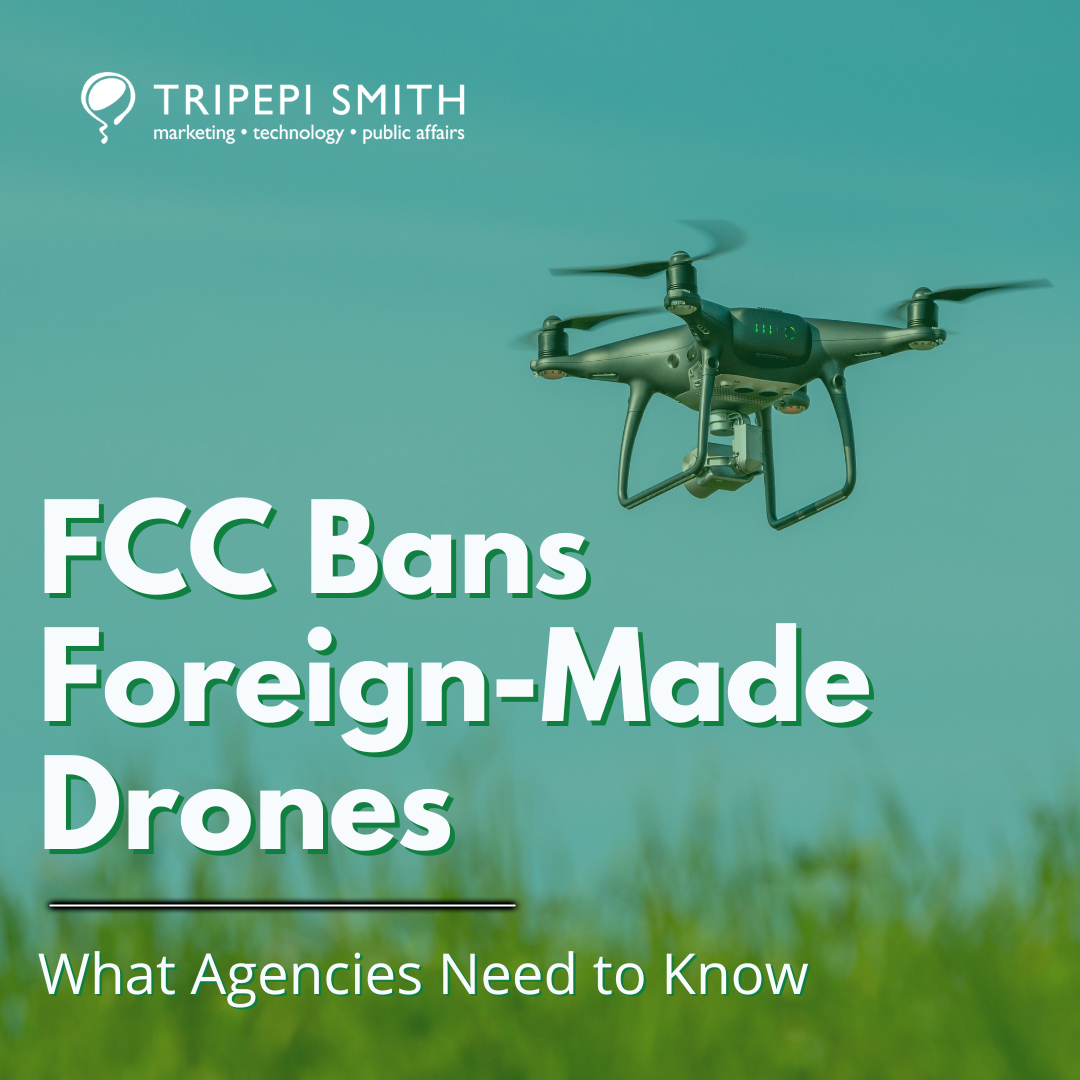
In December 2025, the U.S. Federal Communications Commission (FCC) added DJI, the world’s top drone manufacturer, and all other foreign-made drones and drone components to its Covered List.
Social media is a crucial method for agencies to connect with their communities and advance strategic communication goals.
Community Choice Aggregation programs represent a fundamental shift in how local energy decisions are made.

Beginning in 2026, many government websites and mobile apps must comply with WCAG 2.1 AA standards, the widely recognized benchmark for digital accessibility.
Explore Tripepi Smith Brands




Contact Us
(626) 536-2173 • Info@TripepiSmith.com • 27702 Crown Valley Parkway, D4 #139 Ladera Ranch, CA 92694
Privacy Policy • © Copyright 2026 Tripepi Smith • All Rights Reserved.